
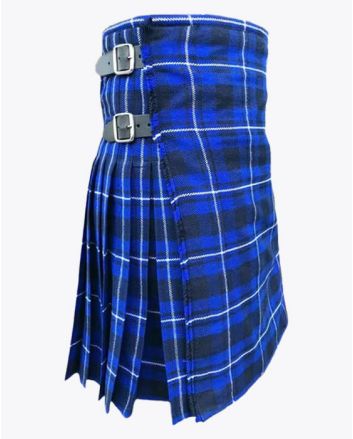
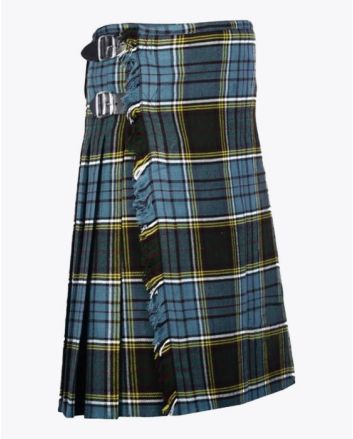
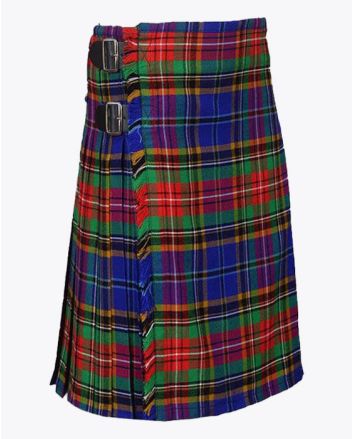
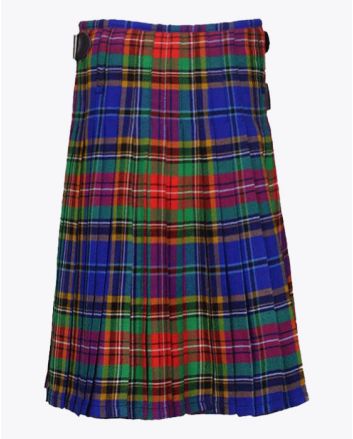
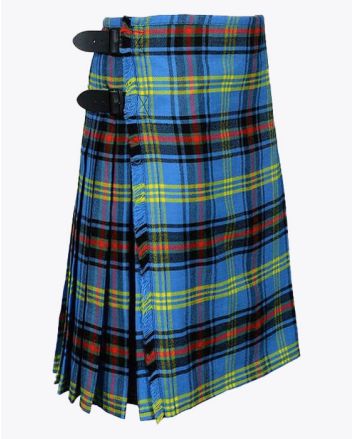
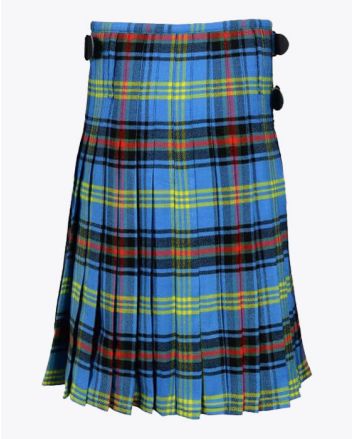
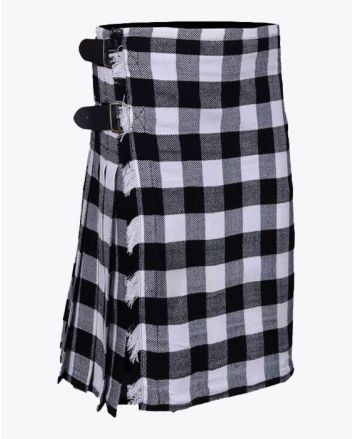
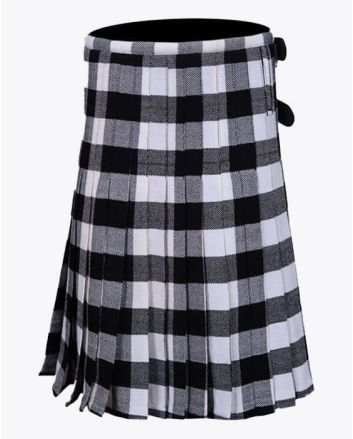
Great History of Tartan kilt
The tartan kilt is one of the most recognized symbols of Scottish culture, with roots going back to many centuries. It is orignated to the 16th century in the ighland of Scotland as long full length garment known as the feileadh mòr or “great kilt”. This was the first version and it was a large piece of tartan fabric, pleated by hand at backside and belted around the waist, often worn over the shoulder for warmth.
By the 18th century, the great kilt evolved into the more modern feileadh beag, or “small kilt,” which focused only on the lower half of the garment. This design was more practical and became widely popular among Highlanders. Tartan patterns—or setts—were originally regional rather than clan-specific, but by the late 1700s and early 1800s, specific tartans began to be associated with Scottish clans, thanks to the influence of Highland regiments and weavers cataloging patterns.
Later on, in the Victorian Era, especially after King George IV's visit to Scotland in 1822, Kilt got more popularity as he wore kilts as a highland dress. This royal endorsement, along with Queen Victoria’s affection for Scotland, made the kilt as formal and ceremonial attire.
Today, the tartan kilt is very common and is worn both as a symbol of Scottish heritage and as a fashionable garment. It can be seen in formal events, weddings, Highland games, and cultural festivals around the world, keeping the tradition alive in both historic and modern forms.
What Makes our Tartan Kilts Special
Traditional kilts are crafted from heavy wool tartan—typically 13 oz or 16 oz—which gives warmth, natural drape, and strong pleats with excellent swing. Lightweight versions (11 oz or less) are available for summer or active wear, though they crease more easily.
Fabric & Construction
Material: Usually 100% wool or poly‑viscose (a polyester-viscose blend) that’s heat-set for permanent pleats, shrink-resistance, durability, and ease of cleaning
Weave: Double-width tartan ensures pattern continuity across pleats; single-width may also be used
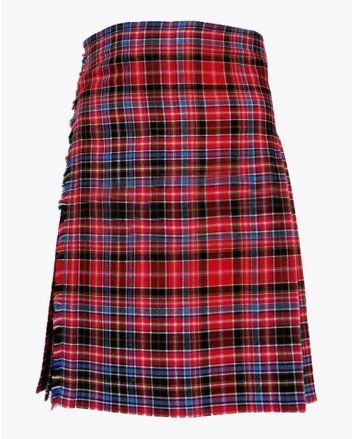
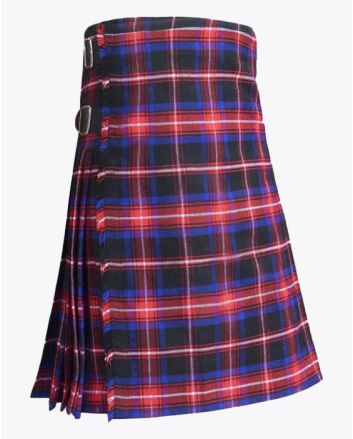
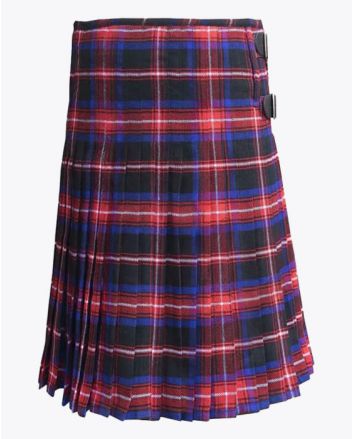
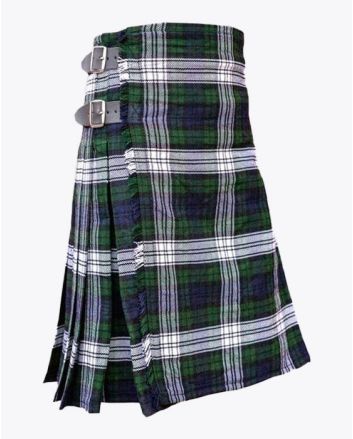
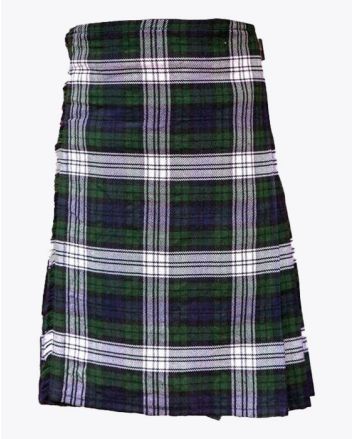
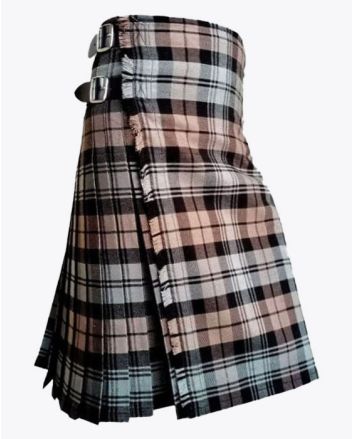
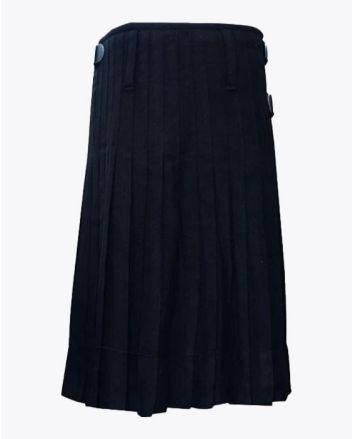
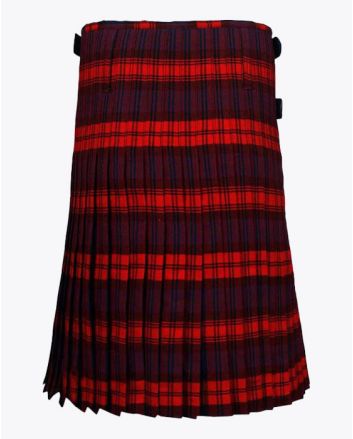
Pleats: Deep knife or box pleats in the back create full shape and movement; the front is flat for a clean kilt apron.
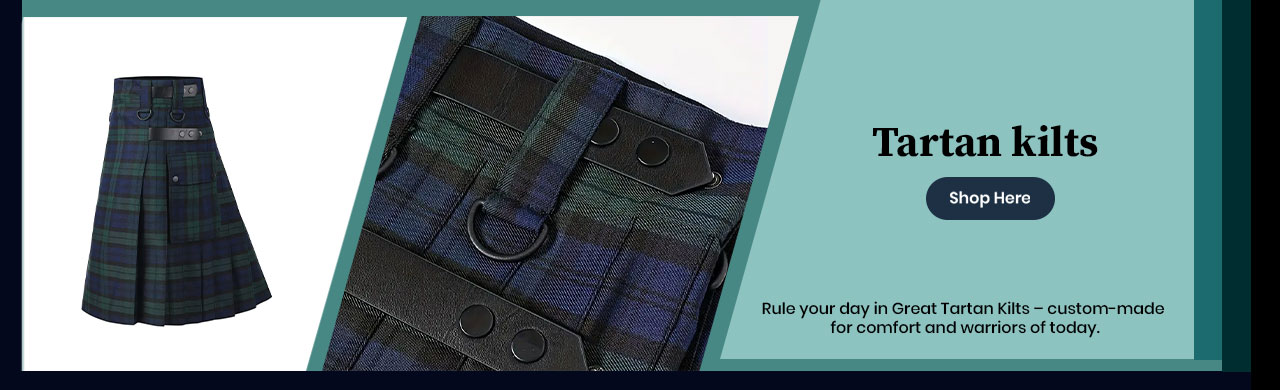
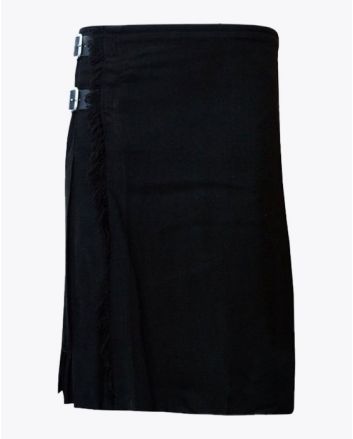
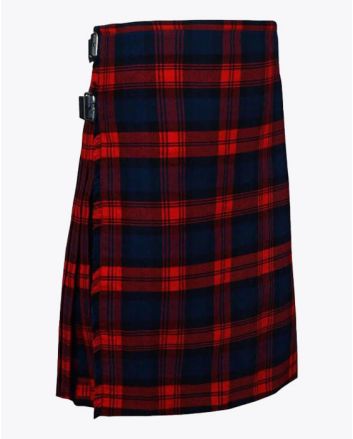
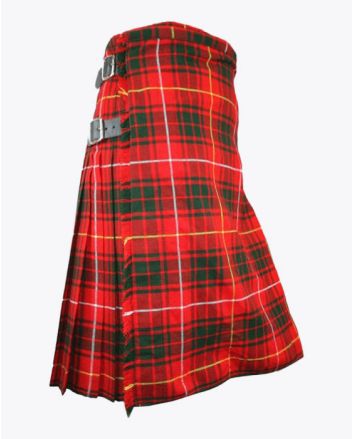
Design and Style: Tartan kilts often include adjustable buckles or straps, a flat front apron, and a traditional belt with kilt pins. They may also feature sewn‑in waistbands, side buckles, or hook-and-eye closures.